Say goodbye to glasses.
Custom wavefront LASIK and flap-free Advanced Surface Treatment (PRK) on the VISX Star S4 — with free consultations for patients across Hanover, York, Gettysburg, and Carroll County, MD.
Say goodbye
to glasses.
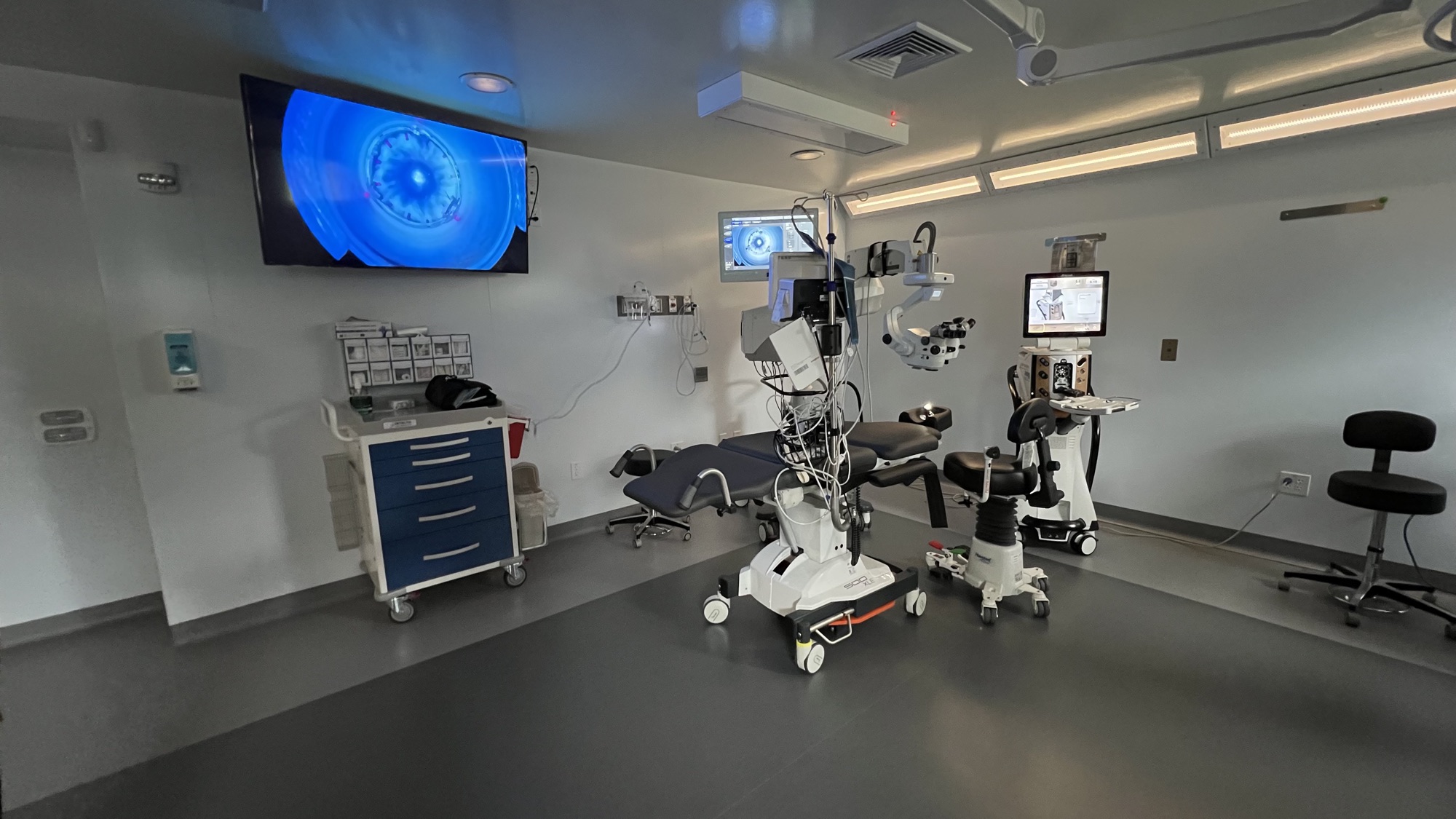
The WaveScan system captures an optical fingerprint of your eye's imperfections — far more detailed than a standard prescription. That data drives the VISX Star S4 laser, which reshapes your cornea in seconds.
- Wavefront optical fingerprint
- VISX Star S4 with 3-D eye tracking
- Corrects myopia, hyperopia & astigmatism
- Results often noticed immediately
AST uses a cool-beam excimer laser to reshape the cornea directly on the surface, with no flap. Ideal for thin corneas, military personnel, professional athletes, and anyone seeking flap-free correction with smoother long-term outcomes.
- No flap — zero flap complications
- Preserves more corneal tissue
- Ideal for thin corneas, military & professional athletes
- Reduced post-op dry eye risk
Also called Refractive Lens Exchange, CLE replaces your eye's natural lens with a premium intraocular lens — EDOF or multifocal — before a cataract develops. It's an excellent option for patients over 45 who are tired of reading glasses or bifocals, or who aren't ideal LASIK candidates. Because the natural lens is removed, you can never develop cataracts in the future.
- Ideal for presbyopia & patients over 45
- Premium EDOF or multifocal lenses
- Corrects near, far & astigmatism
- Eliminates future cataract risk
Am I a candidate?
Good LASIK candidates generally meet these criteria:
The only way to know for certain is a comprehensive evaluation. We offer free LASIK consultations — call to schedule yours.
Affordable financing
We accept CareCredit with 24-month no-interest financing for qualifying balances. No upfront cost, no annual fees, no prepayment penalties — just low monthly payments.
Schedule a Free ConsultLASIK questions, answered.
01What Is LASIK Eye Surgery?
LASIK (Laser-Assisted In Situ Keratomileusis) is a laser vision correction procedure designed to reduce or eliminate dependence on glasses and contact lenses. LASIK reshapes the cornea to improve how light focuses on the retina, resulting in clearer vision.
02What Vision Problems Can LASIK Correct?
LASIK can correct:
- Nearsightedness (myopia)
- Farsightedness (hyperopia)
- Astigmatism
Many patients achieve 20/20 vision or better after LASIK, although individual results vary.
03Am I A Candidate For LASIK?
Ideal LASIK candidates generally:
- Are at least 18 years old
- Have stable vision
- Have healthy corneas
- Are free from significant eye disease
- Have realistic expectations
A comprehensive LASIK evaluation is required to determine candidacy.
04What Is The Best Age For LASIK?
Many patients undergo LASIK in their 20s, 30s, and 40s. However, age alone does not determine eligibility. Healthy eyes and a stable prescription are more important than age.
05Am I Too Old For LASIK?
Not necessarily. Some patients in their 50s and even 60s may qualify. However, patients over 50 often have better long-term visual outcomes with Refractive Lens Exchange (RLE) rather than LASIK.
06Is LASIK Permanent?
The corneal reshaping performed during LASIK is permanent. However, natural aging changes such as presbyopia and cataracts can still affect vision later in life.
07How Long Does LASIK Last?
For most patients, LASIK results remain stable for decades. Future changes in vision are usually related to aging rather than failure of the LASIK procedure.
08Does LASIK Hurt?
LASIK is generally not painful. Numbing eye drops are used before the procedure. Some patients experience mild irritation, tearing, or scratchiness during the first few hours after surgery.
09How Long Does LASIK Take?
The laser treatment itself usually takes less than one minute per eye. Most LASIK procedures are completed within 15 minutes.
10How Soon Will I See Better After LASIK?
Many patients notice improved vision within hours. Vision often continues improving over the first few days and weeks after surgery.
11What Is LASIK Recovery Like?
Most patients return to work and normal activities within one to two days. Vision usually stabilizes over several weeks.
12Can LASIK Eliminate The Need For Glasses?
LASIK significantly reduces dependence on glasses for most patients. However, some patients may still require glasses for specific activities or later in life as natural aging occurs.
13Will I Need Reading Glasses After LASIK?
Patients eventually develop presbyopia, the normal age-related loss of near focusing ability. Most individuals over age 40 will require reading glasses at some point regardless of LASIK.
14Can LASIK Correct Astigmatism?
Yes. LASIK is highly effective at treating many forms of astigmatism and can often reduce or eliminate the need for corrective lenses.
15What Are The Risks Of LASIK?
Potential risks include:
- Dry eyes
- Glare
- Halos
- Night vision disturbances
- Undercorrection
- Overcorrection
Serious complications are uncommon when patients are properly screened.
16Can LASIK Cause Blindness?
Permanent severe vision loss from LASIK is extremely rare. LASIK has one of the highest patient satisfaction rates of any elective medical procedure.
17Why Do Some Patients Not Qualify For LASIK?
Common reasons include:
- Thin corneas
- Severe dry eye disease
- Unstable prescriptions
- Keratoconus
- Certain autoimmune diseases
- Extremely high prescriptions
Alternative procedures may still be available.
18What Happens If I Am Not A Candidate For LASIK?
Many patients may qualify for:
- PRK
- EVO ICL
- Refractive Lens Exchange (RLE)
- Advanced Cataract Surgery
Your ophthalmologist can recommend the best option based on your eye health and visual goals.
19Is LASIK Better Than Contact Lenses?
LASIK eliminates many of the inconveniences associated with contact lenses, including daily maintenance, dry eyes from lens wear, and ongoing replacement costs.
20How Much Does LASIK Cost?
LASIK pricing varies based on technology, surgeon experience, and individual visual needs. During your consultation, a customized treatment plan and pricing options will be reviewed.
21Is LASIK Covered By Insurance?
LASIK is generally considered an elective procedure and is not covered by most medical insurance plans. Flexible spending accounts (FSA) and health savings accounts (HSA) may often be used.
22Can LASIK Improve Night Vision?
Many patients experience improved night vision compared to their vision before surgery. However, some individuals may temporarily notice glare or halos during healing.
23Can Both Eyes Be Treated The Same Day?
Yes. LASIK is routinely performed on both eyes during the same visit.
24How Accurate Is LASIK?
Modern wavefront-guided LASIK technology allows highly precise treatment and excellent visual outcomes for appropriately selected patients.
25What Is Wavefront-Guided LASIK?
Wavefront technology creates a detailed map of your eye's optical system. This customized approach can improve visual quality and reduce higher-order aberrations.
26Can LASIK Fix My Reading Vision?
Traditional LASIK primarily treats distance vision. Patients over age 40 who want both distance and near vision may be candidates for monovision LASIK or Refractive Lens Exchange.
27How Do I Know If LASIK Or RLE Is Better For Me?
Generally:
- Younger patients with healthy lenses often benefit from LASIK.
- Patients over 50 frequently achieve better long-term outcomes with Refractive Lens Exchange because it also prevents future cataracts.
A detailed examination is necessary to determine which option is best.
28What Should I Expect During My LASIK Consultation?
Your LASIK evaluation includes:
- Corneal mapping
- Refraction testing
- Tear film analysis
- Pupil measurements
- Corneal thickness measurements
- Comprehensive eye examination
These tests help determine the safest and most effective vision correction option.
29Why Choose May Eye Care Center For LASIK?
At May Eye Care Center, every patient receives a comprehensive evaluation to determine whether LASIK, PRK, Refractive Lens Exchange, or another vision correction procedure is the best choice. Our goal is to provide personalized recommendations based on your eyes, lifestyle, and long-term visual goals.
Ready to see
the world clearly?
Schedule a consultation with Dr. May today. Our team walks you through every step — from your first exam to your clearest day yet.
Contact the practice
Hanover, PA 17331