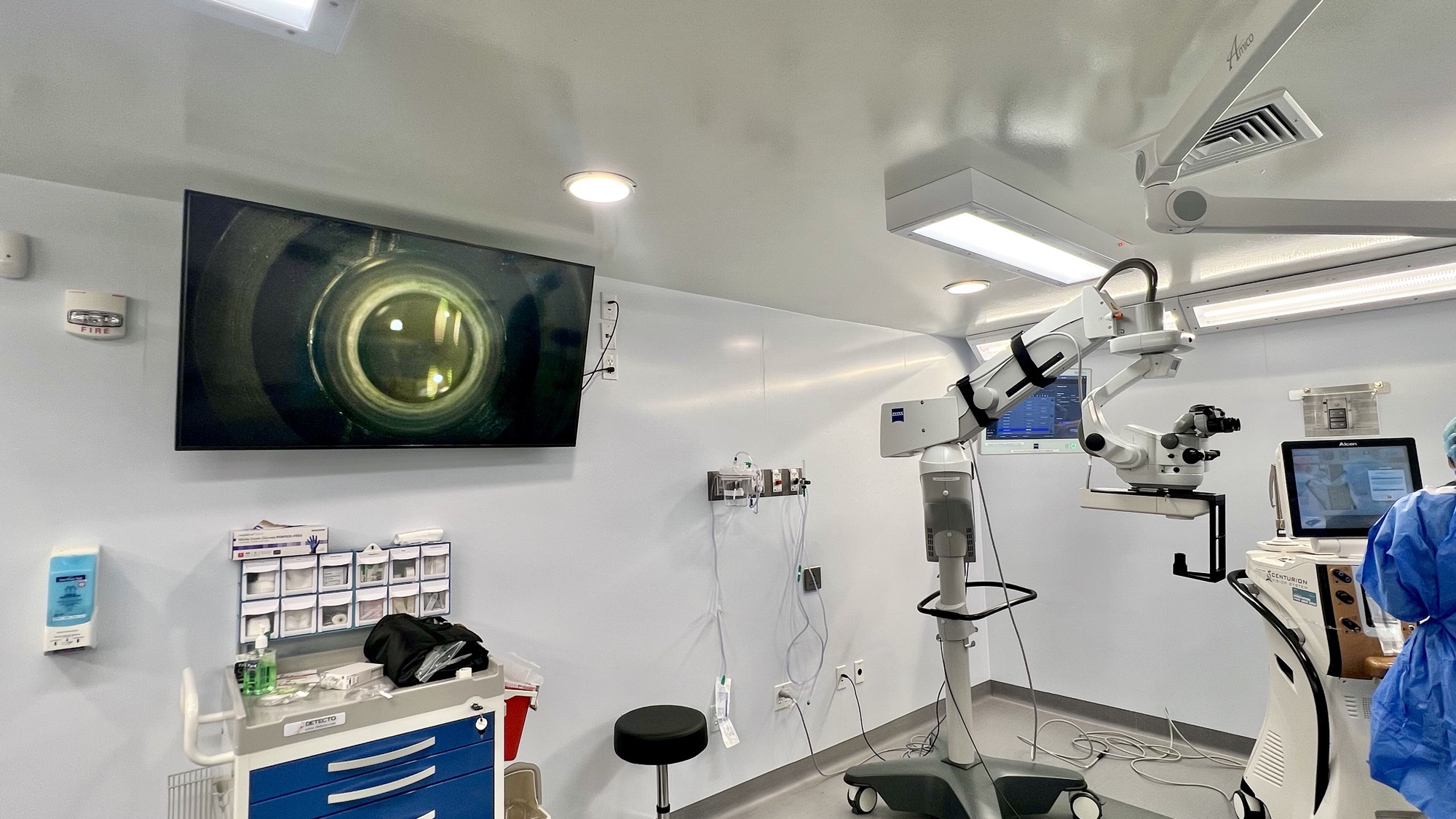
Laser cataract surgery, in Hanover.
ReLACS femtosecond laser cataract surgery with premium lens implants — restoring clear, vivid vision for patients across York, Gettysburg, Adams County, and Carroll County, MD.
Cataracts shouldn't
dim your world.
What is a cataract?
A cataract forms when proteins in the eye's natural lens clump together and the lens clouds over. Vision begins to look like you're always peering through a fogged window — washed out, blurry, and dull.
Cataracts develop slowly and are most common after 60, though injury, medication, or genetics can bring them earlier. The only effective treatment is surgical removal and replacement with an artificial lens.
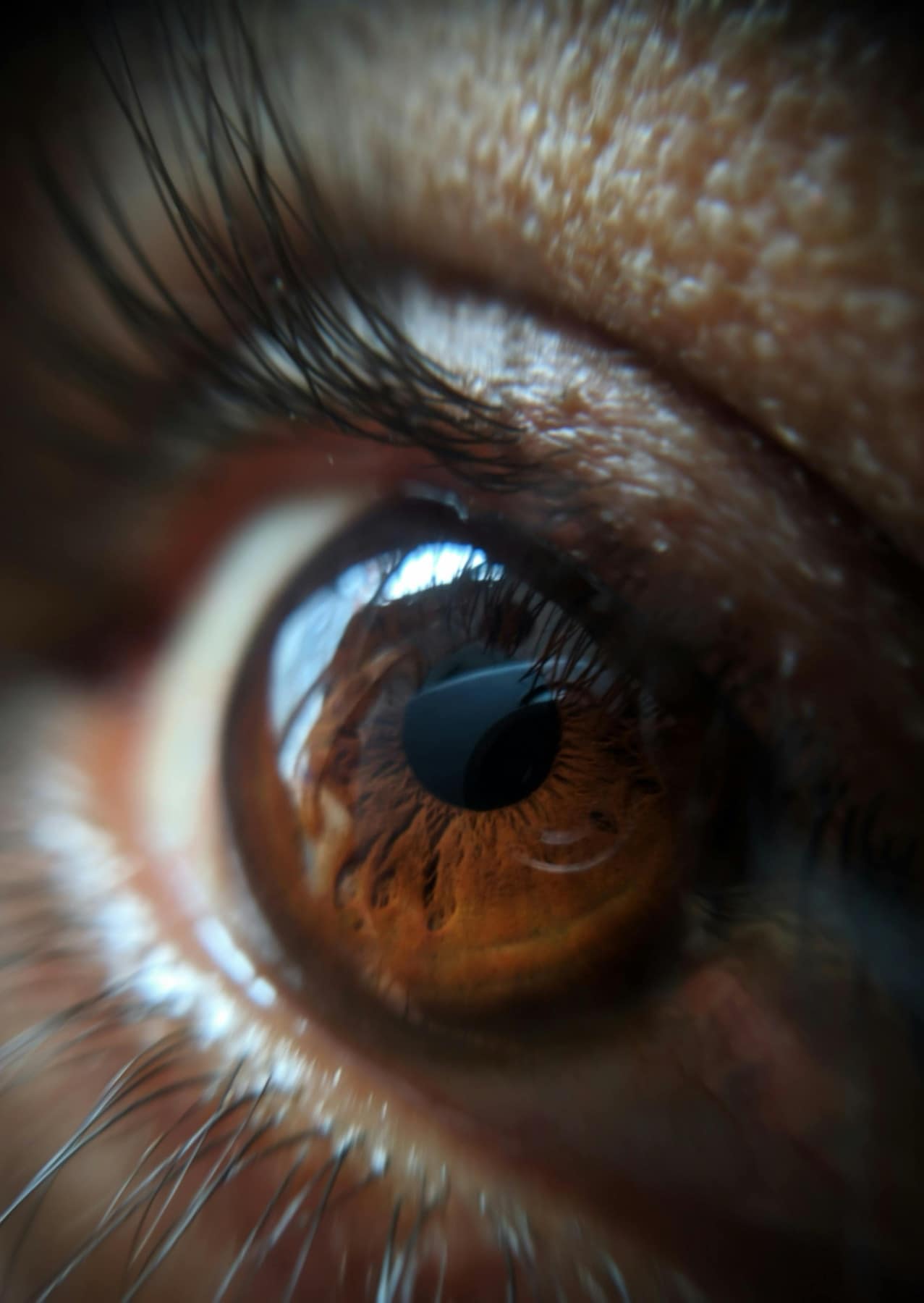
Precision no blade can match.
ReLACS — Refractive Laser Assisted Cataract Surgery — uses femtosecond laser technology to deliver an accuracy that manual surgery simply can't reach.
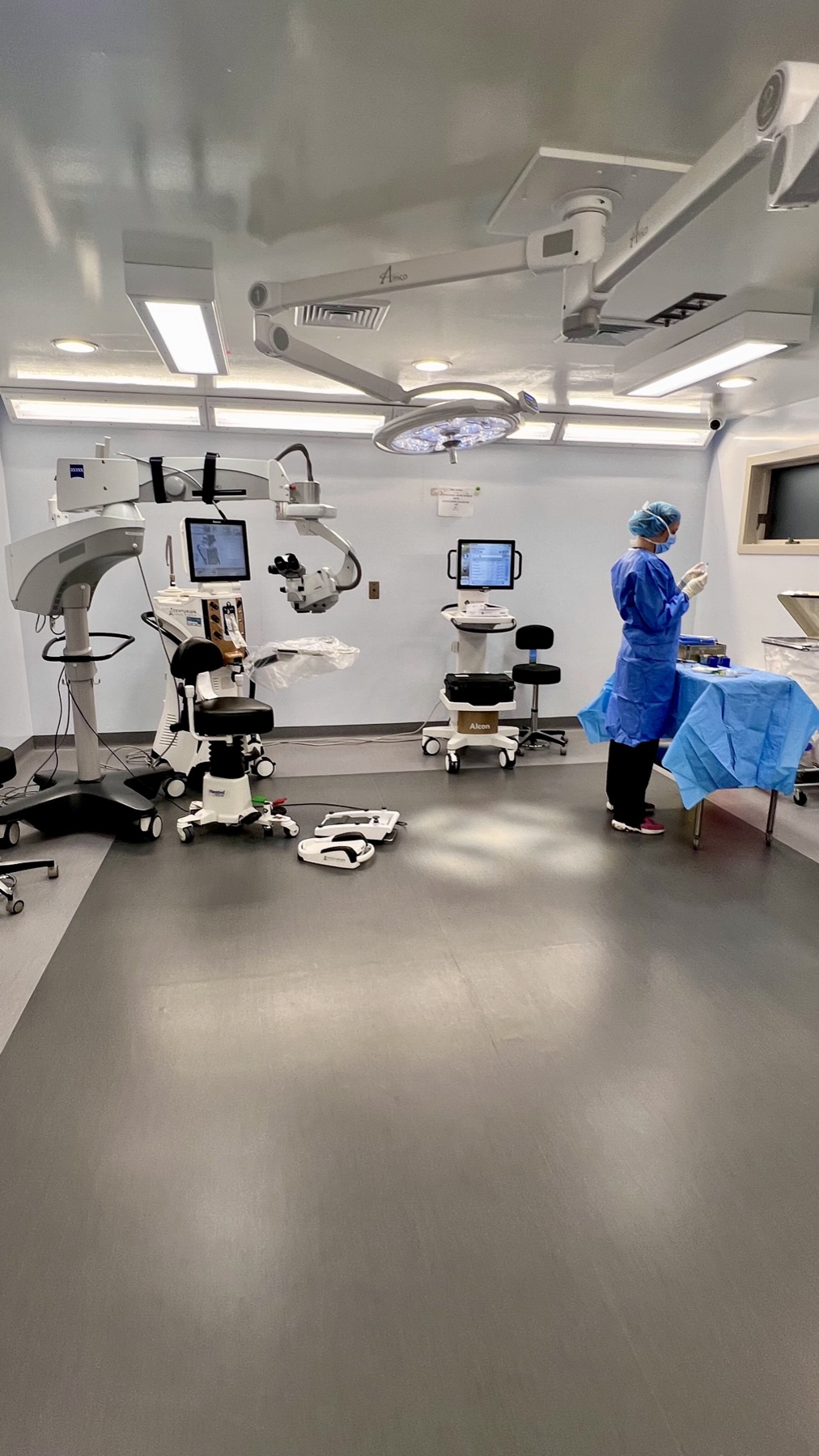
3D Eye Mapping
Your eye is digitally mapped with advanced imaging to build a surgical plan tailored to your exact anatomy.
Capsule Opening
The laser creates a perfectly circular opening in the lens capsule, optimizing lens centration and stability.
Laser-Guided Cataract Softening and Cutting
The laser makes precise cuts in the cataract to protect the eye from energy damage during cataract removal.
Lens Replacement
Your cloudy natural lens is gently broken up, removed, and replaced with your chosen premium intraocular lens.
Laser-Guided Positioning
The new lens is positioned under laser guidance to maximize optical performance for your vision goals.
A lens matched
to your life.
Corrects vision at a single fixed distance. Most patients still use glasses for reading. The most cost-effective option and widely covered by insurance.
Multiple focal zones reduce — and for many patients eliminate — the need for glasses at near, intermediate, and distance. Because the lens splits light into separate zones, some patients notice more halos or glare at night, a trade-off Dr. May will talk through with you.
Extended Depth of Focus lenses stretch sharp distance vision into the intermediate range — well suited to driving, computer work, cooking, and watching TV. Unlike a multifocal, an EDOF lens doesn't split light into separate zones, so most patients see fewer halos and less glare at night. The trade-off: you'll usually still want readers for fine print up close.
Astigmatism is an irregular, oval curvature of the cornea that blurs vision at every distance. A Toric lens is built to offset that specific curvature while treating the cataract — delivering the sharpest possible result for astigmatic eyes.
Cataract surgery questions, answered.
01How Do I Know When It Is Time For Cataract Surgery?
Cataract surgery is recommended when cloudy vision begins interfering with your daily activities. Common symptoms include difficulty driving at night, glare from headlights, blurry vision, faded colors, frequent changes in glasses prescriptions, and trouble reading or watching television. The decision is based on your visual needs and quality of life rather than the appearance of the cataract alone.
02What Is A Cataract?
A cataract occurs when the natural lens inside the eye becomes cloudy. Cataracts commonly develop with age and can cause blurred vision, glare, halos around lights, poor night vision, and difficulty seeing fine details. Cataracts are one of the most common causes of vision loss and are highly treatable with modern cataract surgery.
03What Causes Cataracts?
Most cataracts develop naturally as part of the aging process. Other risk factors include diabetes, smoking, prolonged UV exposure, steroid use, eye injuries, previous eye surgery, and family history of cataracts.
04Is Cataract Surgery Covered By Medicare?
Yes. Medicare and most insurance plans typically cover cataract surgery when the cataract significantly affects vision and daily activities. Premium lens implants and advanced technology options that reduce dependence on glasses may involve additional out-of-pocket costs.
05Is Cataract Surgery Painful?
Modern cataract surgery is generally painless. Numbing eye drops are used, and many patients receive mild relaxation medication. Most patients report feeling pressure but little or no discomfort during the procedure.
06How Long Does Cataract Surgery Take?
The procedure itself usually takes approximately 10 to 20 minutes. Most patients spend less than two hours total at the surgery center and return home the same day.
07How Safe Is Cataract Surgery?
Cataract surgery is one of the safest and most successful surgical procedures performed today. Millions of cataract surgeries are performed annually, and most patients experience significant improvements in vision.
08What Happens During Cataract Surgery?
During cataract surgery, the cloudy natural lens is removed through a tiny incision and replaced with a clear artificial intraocular lens (IOL). The new lens remains in the eye permanently and cannot be felt or seen.
09What Is Laser Cataract Surgery?
Laser-assisted cataract surgery uses advanced femtosecond laser technology to perform certain steps of the procedure with exceptional precision. The laser can create incisions, soften the cataract, and help correct astigmatism in selected patients.
10What Is The Difference Between Traditional And Laser Cataract Surgery?
Both procedures remove the cataract and replace it with a lens implant. Laser-assisted cataract surgery uses computer-guided laser technology for portions of the procedure and may provide additional precision and customization for certain patients.
11Will I Need Glasses After Cataract Surgery?
That depends largely on the lens implant chosen. Some patients still require glasses for reading or distance, while others significantly reduce their dependence on glasses through advanced lens technologies.
12What Is The Best Lens Implant For Cataract Surgery?
There is no single "best" lens for everyone. The ideal lens depends on your lifestyle, hobbies, occupation, visual goals, and eye health. Options include monofocal, toric, EDOF, and multifocal lens implants.
13What Is An EDOF Lens Implant?
An Extended Depth of Focus (EDOF) lens provides excellent distance vision while extending vision into the intermediate range used for computers, dashboards, shopping, cooking, dining, and many everyday activities. Most patients still require reading glasses for small print.
14What Is A Multifocal Lens Implant?
Multifocal lenses are designed to provide distance, intermediate, and near vision. Many patients achieve substantial freedom from glasses, although some may notice halos or glare around lights, particularly at night.
15What Is A Toric Lens Implant?
A toric lens implant corrects astigmatism during cataract surgery. Reducing astigmatism often improves vision quality and decreases dependence on glasses after surgery.
16Are Premium Lens Implants Worth The Extra Cost?
Many patients find premium lens implants worthwhile because they reduce dependence on glasses and improve lifestyle convenience. The value depends on your visual goals and willingness to wear glasses after surgery.
17Can Astigmatism Be Corrected During Cataract Surgery?
Yes. Astigmatism can often be corrected using toric lens implants, limbal relaxing incisions, or laser-assisted technology during cataract surgery.
18Can Cataracts Grow Back After Surgery?
No. Once a cataract is removed, it cannot grow back. However, some patients develop clouding of the capsule behind the lens implant, known as posterior capsule opacification, which is easily treated with a quick YAG laser procedure.
19What Is A YAG Laser Capsulotomy?
A YAG laser capsulotomy is a painless office procedure used to remove cloudiness that occasionally develops behind a lens implant after cataract surgery. Vision often improves rapidly following treatment.
20How Soon Will My Vision Improve After Cataract Surgery?
Many patients notice improved vision within 24 to 48 hours. Vision continues to stabilize over several weeks as healing progresses.
21How Long Is Recovery After Cataract Surgery?
Most patients return to normal daily activities within a few days. Full healing typically occurs over several weeks, although vision often improves much sooner.
22Can I Drive After Cataract Surgery?
Most patients can resume driving once vision meets legal driving requirements and their ophthalmologist approves. This often occurs within a few days after surgery.
23Can Both Eyes Be Done At The Same Time?
Most surgeons perform cataract surgery one eye at a time to maximize safety and ensure optimal outcomes. The second eye is typically treated days to weeks later.
24What Restrictions Will I Have After Surgery?
Patients are generally advised to avoid heavy lifting, swimming, hot tubs, and rubbing the eye during the early healing period. Most normal activities can be resumed quickly.
25Can Cataract Surgery Correct My Nearsightedness Or Farsightedness?
Yes. Modern lens implants allow many patients to reduce or eliminate nearsightedness, farsightedness, and astigmatism while removing the cataract.
26Am I Too Old For Cataract Surgery?
There is no upper age limit for cataract surgery. Overall health and expected visual benefit are more important than age alone.
27Can Diabetics Have Cataract Surgery?
Yes. Cataract surgery is commonly performed in diabetic patients. Careful evaluation of retinal health helps optimize outcomes.
28Can Cataract Surgery Help My Night Driving?
Many patients experience significant improvement in night vision, glare, halos, and headlight sensitivity after cataract surgery.
29Will Cataract Surgery Improve Colors?
Yes. Cataracts often make colors appear dull, yellow, or faded. Many patients are surprised by how bright and vivid colors appear after surgery.
30Why Choose May Eye Care Center For Cataract Surgery?
At May Eye Care Center, patients receive comprehensive cataract evaluations, advanced diagnostic testing, laser cataract surgery options, premium lens technologies, and personalized recommendations designed around their lifestyle and visual goals. We proudly serve patients throughout Hanover, York, Gettysburg, Adams County, Carroll County, and surrounding communities.
Ready to see
the world clearly?
Schedule a consultation with Dr. May today. Our team walks you through every step — from your first exam to your clearest day yet.
Contact the practice
Hanover, PA 17331